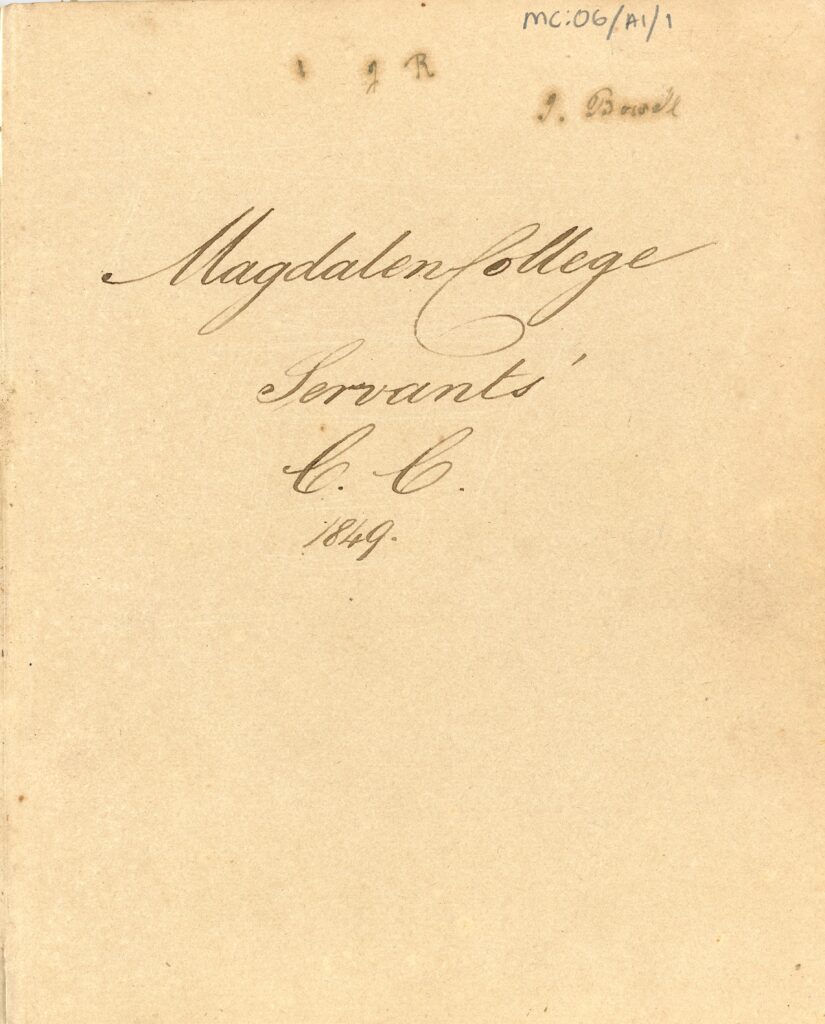
While many staff and servants in the nineteenth and twentieth centuries could spend their entire careers at Magdalen, they were by no means defined solely by their work. Just like the students whose rooms they cleaned or meals they prepared, members of Magdalen staff engaged in a wide range of extra-curricular activities, some of which were organised collectively and others pursued individually.
As among the students, team sports were a popular pastime among the staff. Chief among these were rowing and cricket, with Magdalen staff members taking to the river as part of the Oxford University and College Servants’ Rowing Club or picking up a bat and ball for the Magdalen College Servants’ Cricket Club. For the less energetic, they might play (and beat) the students at indoor games like shove ha’penny.
Others sought fulfilment through paper and pen. Chief among these was Horace Richardson, who worked as a member of the college’s buttery staff in the 1930s. An aspiring writer, he composed poems and short stories during his time at Magdalen, the latter of which he submitted to newspaper-sponsored competitions. Richardson also wrote an unfinished novel. Set at the fictional St Giles’ College, which is modelled heavily on Magdalen, its plot follows two college servants, one of whom, like the real-life Richardson, attempts to unionise the college staff.
Between 1914 and 1918, and again from 1939 to 1945, members of Magdalen staff performed service away from college of a very different sort. At least eight are known to have given their lives during the two World Wars. Their names are today recorded on the college’s war memorials alongside those of the students and Fellows who similarly laid down their lives for King and Country.
Scorebook
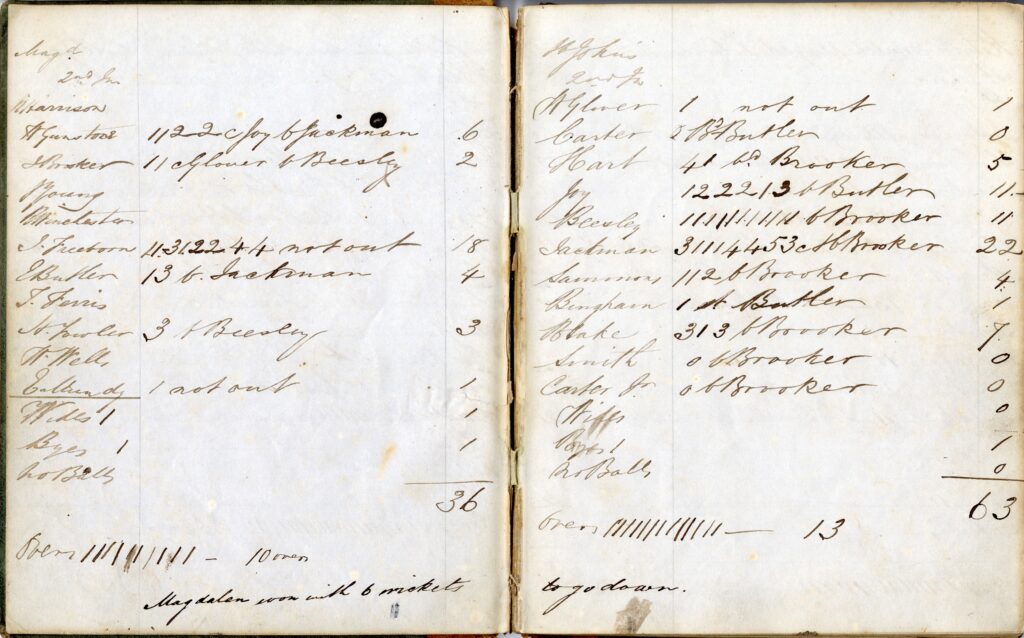
The Magdalen College Servants’ Cricket Club was founded before 1849. This scorebook contains its first recorded match (a victory over St John’s College). Servant sports teams were incredibly popular in Victorian Oxford, enduring through to the 1950s. The MCSCC played other college servants’ teams, as well as undergraduate and village sides.
MCA, O/6/A1/1
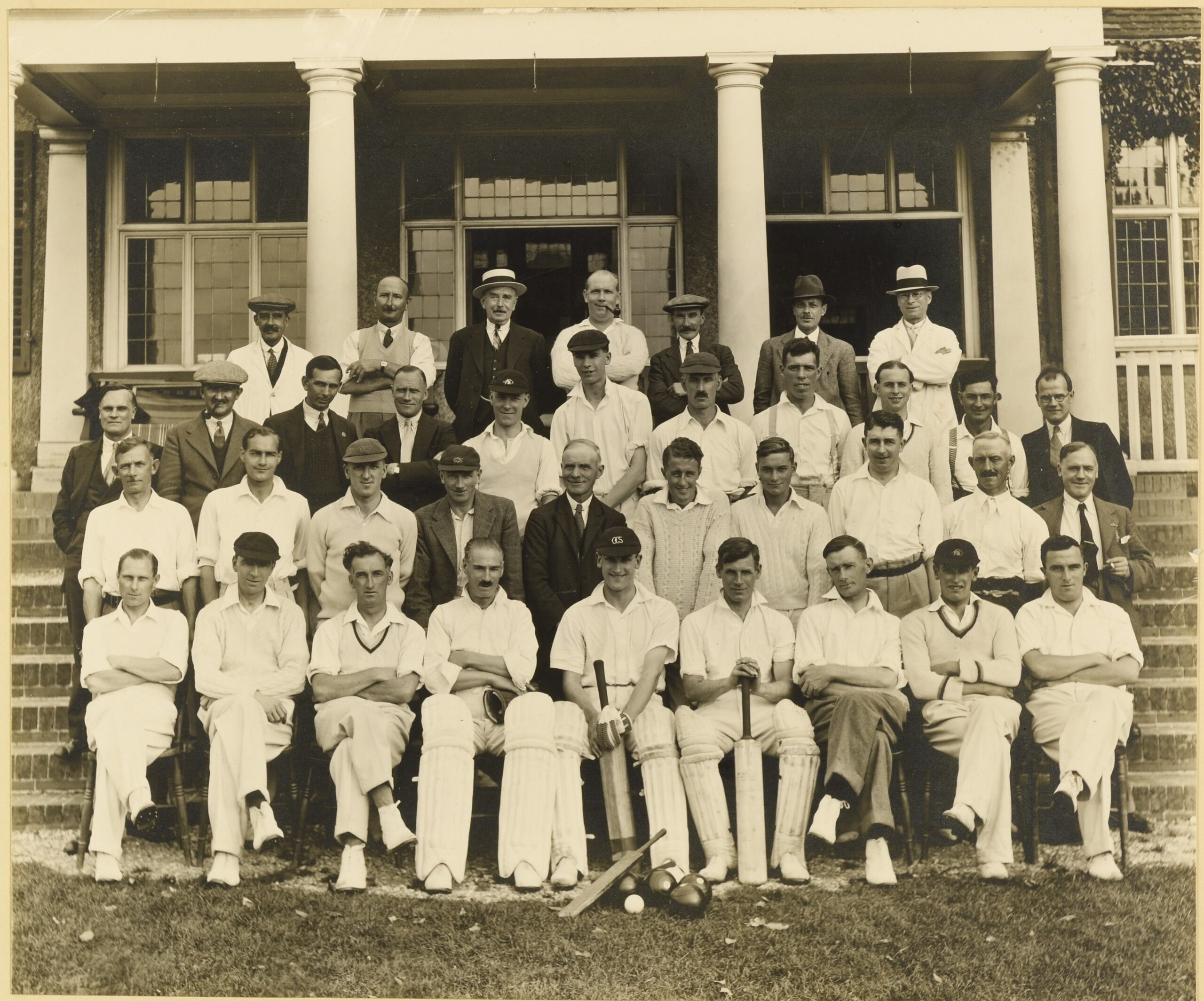
Magdalen College Servants' Sports Club photograph, 1935
Pictured here on the right is Horace Stanley Richardson, the Magdalen College servant (1929-1939) and political activist who attempted to unionise his fellow college staff members in the 1930s
Photo
This photo shows members of the Magdalen College Servants’ Cricket Club in 1935 outside Magdalen’s sports pavilion.
MCA, DR/1/14
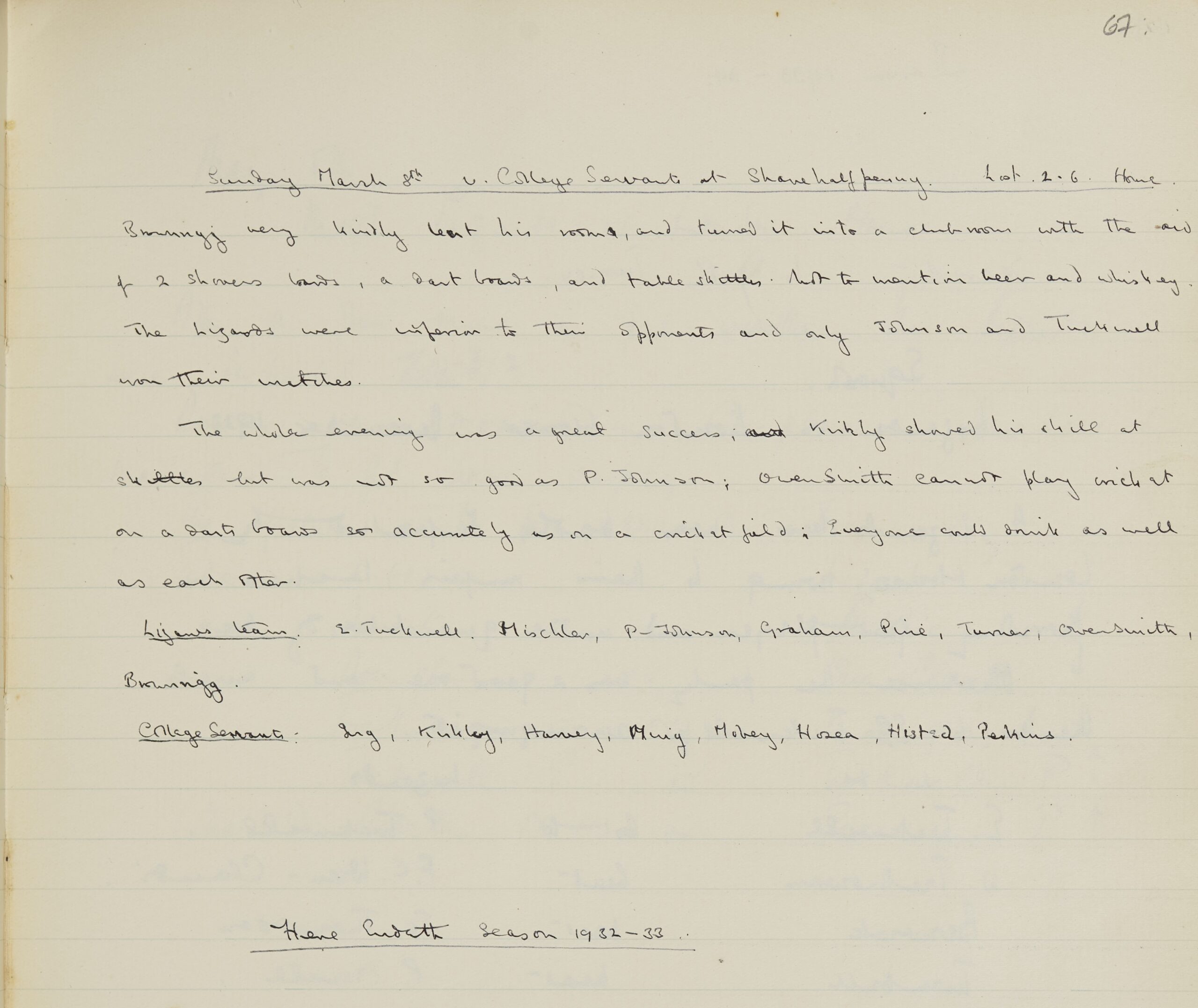
Shove ha’penny
The page above is reproduced from the minute book of the Lizards Club, which was established at Magdalen in 1928. A student sports association, its members eschewed serious competition in favour of the social aspect of sporting matches. Besides its lack of concern for the rules of the various sports which it played, the Lizards organised fixtures against non-traditional opponents, including college servants. The extract above gives a humorous account of a round of pub games, including shove ha’penny, played against Magdalen servants on 8 March 1932, which the servants won.
MCA, O/20/MS/1/1, p. 67
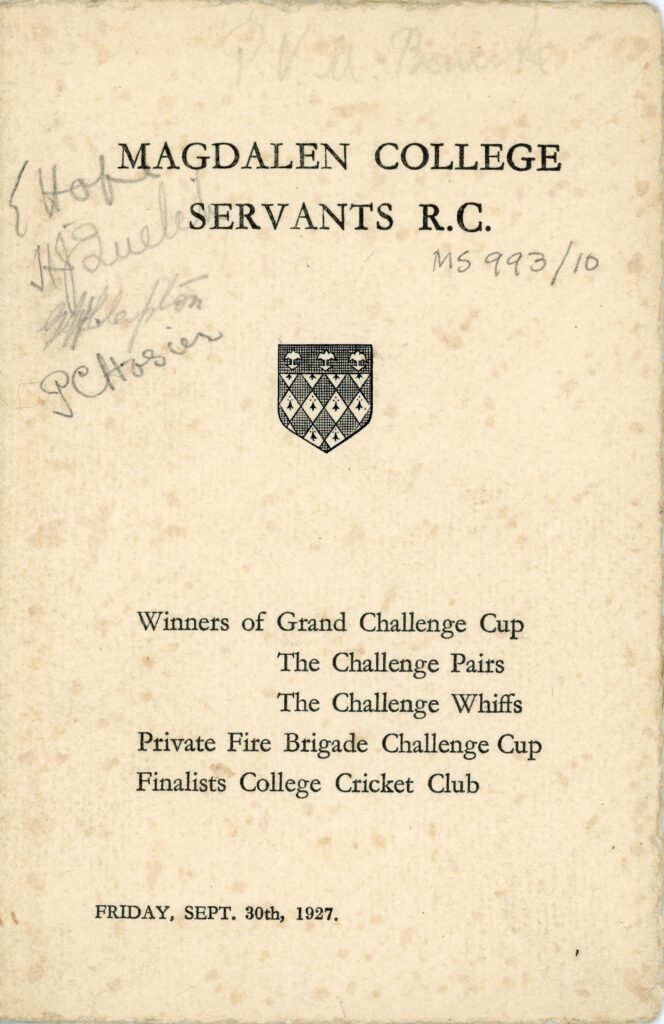
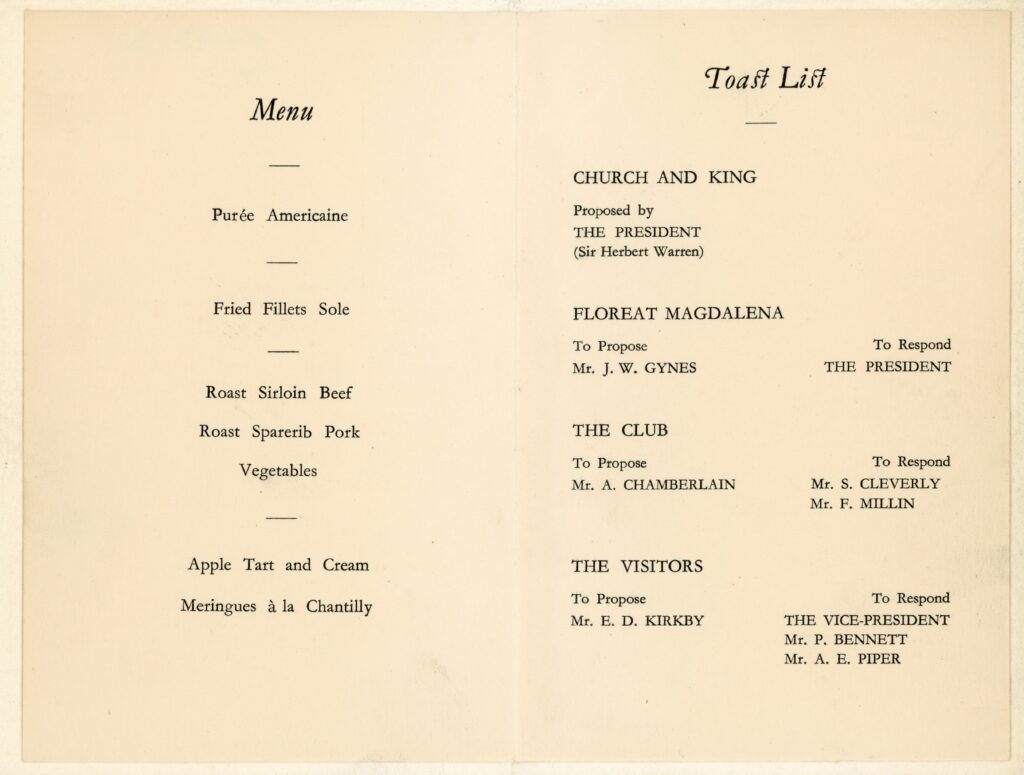
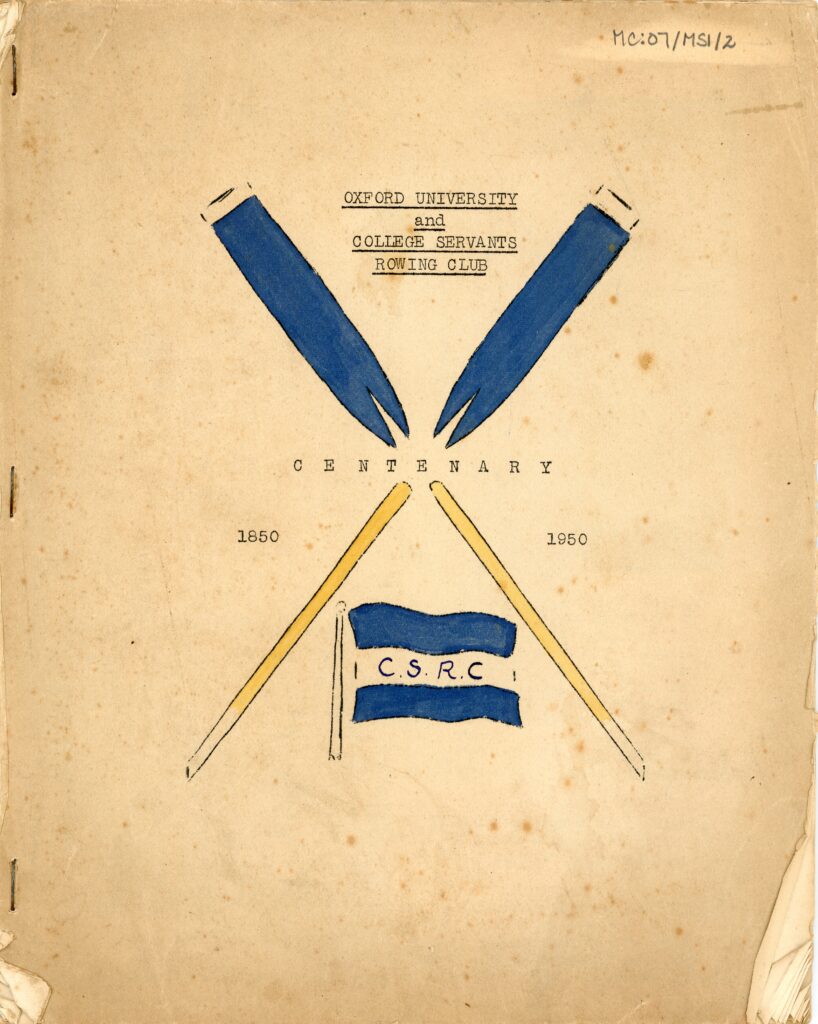
On the river
Founded in 1850, the Oxford University and College Servants’ Rowing Club was formed of different college crews. Like its student counterpart, the OUCSRC competed against its Cambridge rival. It also hosted an annual Easter Regatta. Successful crews would be fêted for their success, as the signed menu card above demonstrates. Also shown here is a typescript history marking the club’s centenary.
MCA, MS/993/10 & O/7/MS1/2
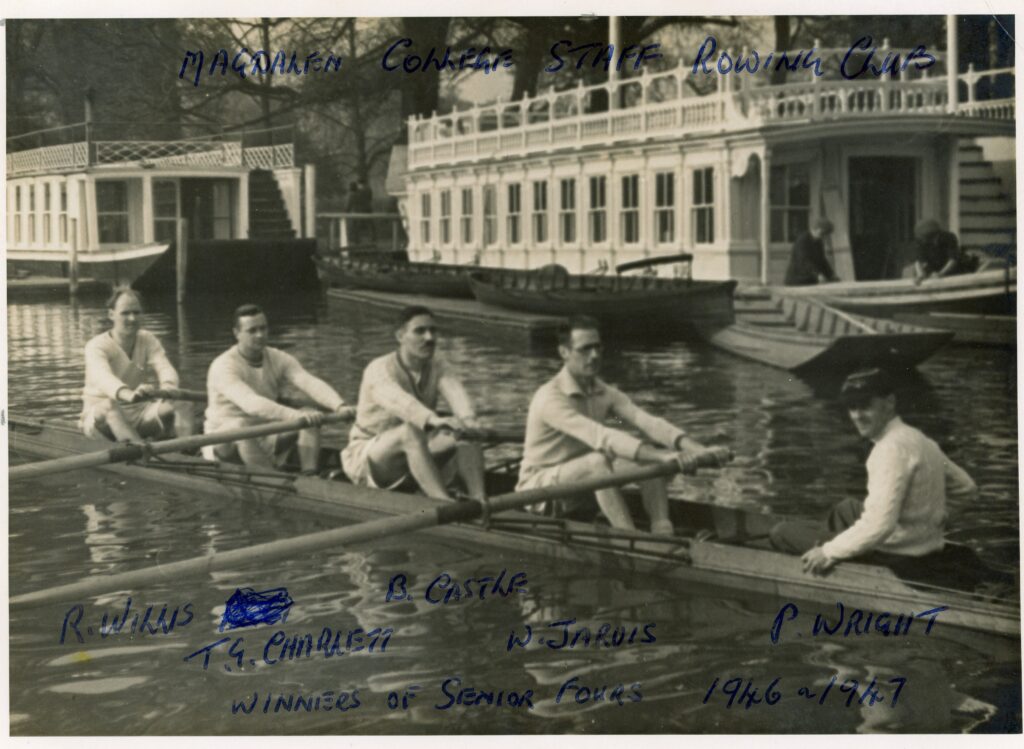
Photo
This photo shows the Magdalen servants’ crew in 1946/7. Among those pictured is Bill Jarvis (1913–2002), the college’s Second Chef from 1932 to 1978.
MCA, DR/2/5
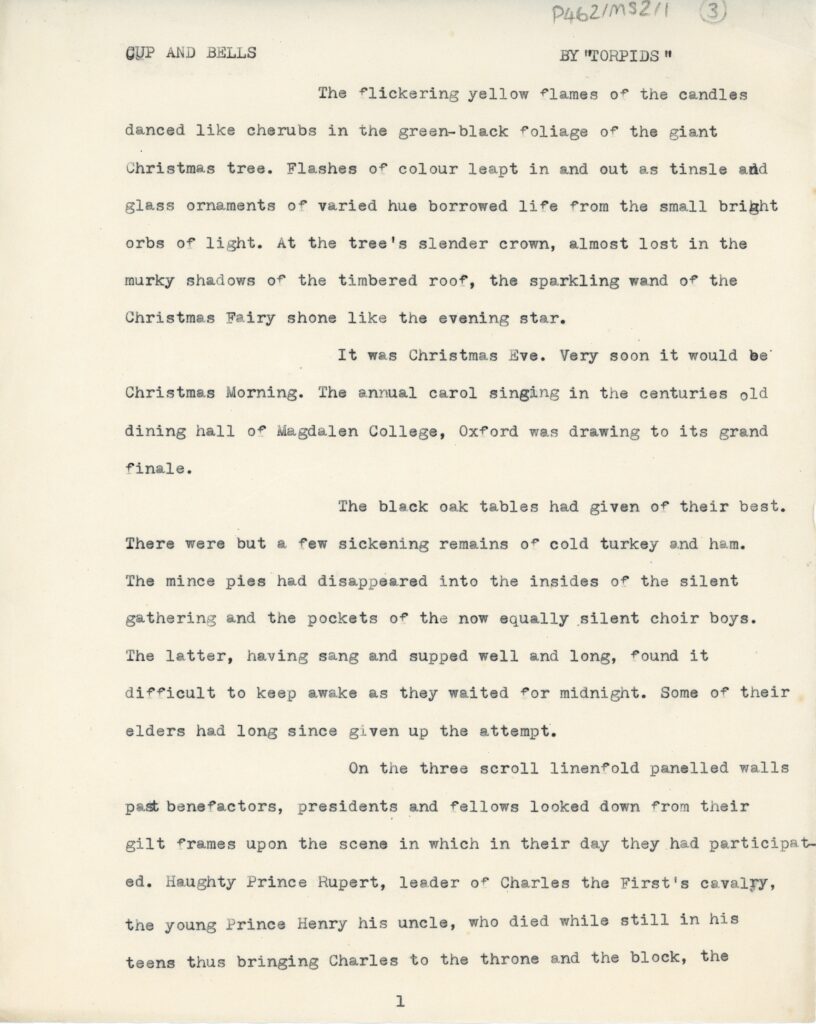
‘Cup and Bells’
Horace Stanley Richardson was a member of Magdalen’s staff from 1929 to 1939. Remembered today for his efforts to unionise the college servants, Richardson’s reputation among his contemporaries was likely shaped most strongly by his political beliefs and organising activities.
But what few – if any – may have known was that Richardson was also a keen writer. Housed today in the college archives are various examples of his creative endeavours, including poems, short stories, and an unfinished novel.
The extract above is from a short story entitled ‘Cup and Bells’, which Richardson submitted under the fittingly Oxonian pseudonym ‘Torpids’ to a competition run by The Observer. Inspired by Magdalen’s annual Christmas Eve carol service, it is a comic mystery concerning the misplacement of the college’s Founder’s Cup. By the end of ‘Cup and Bells’, Richardson reveals to his readers that a sinister theft has not taken place. Instead, the treasured Founder’s Cup has been intentionally mislaid in a juvenile prank organised by the daughter of Magdalen’s Dean and her lover, a Rhodes scholar.
MCA, P/462/MS2/1, p. 3
Novel
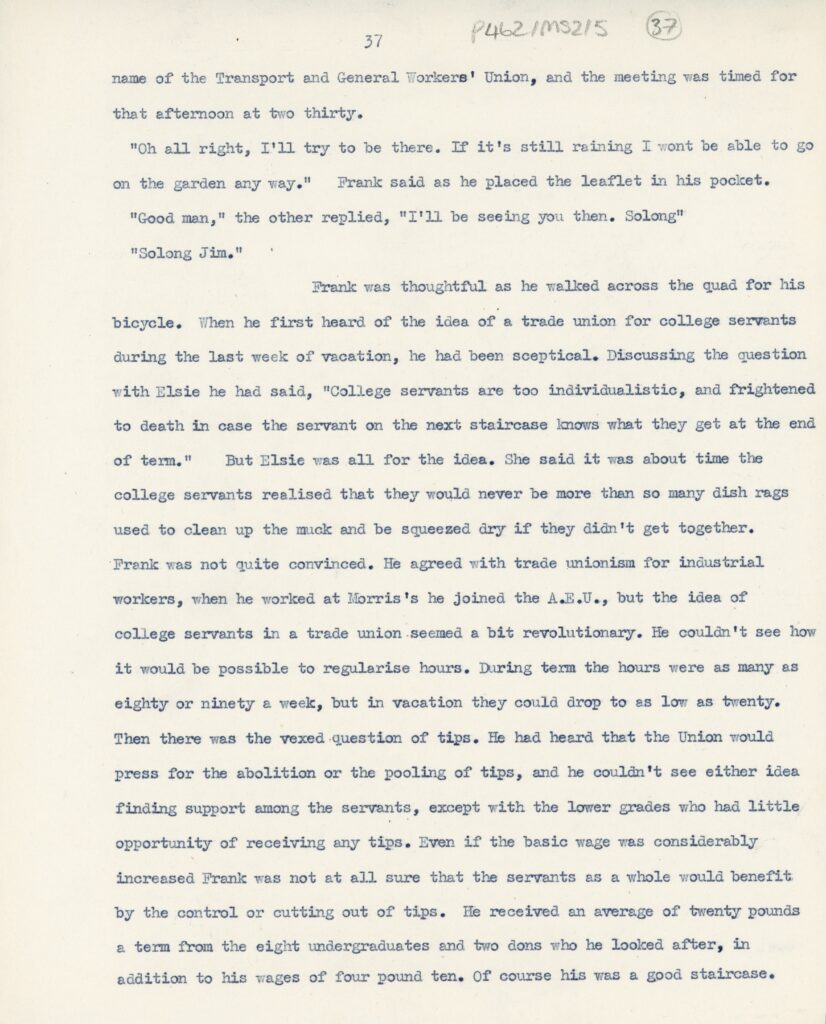
Horace Stanley Richardson’s longest piece of creative writing is an untitled and unfinished novel. Stretching over more than a hundred pages, it is set at the fictionalised ‘St Giles’ College’, which is heavily modelled on Magdalen.
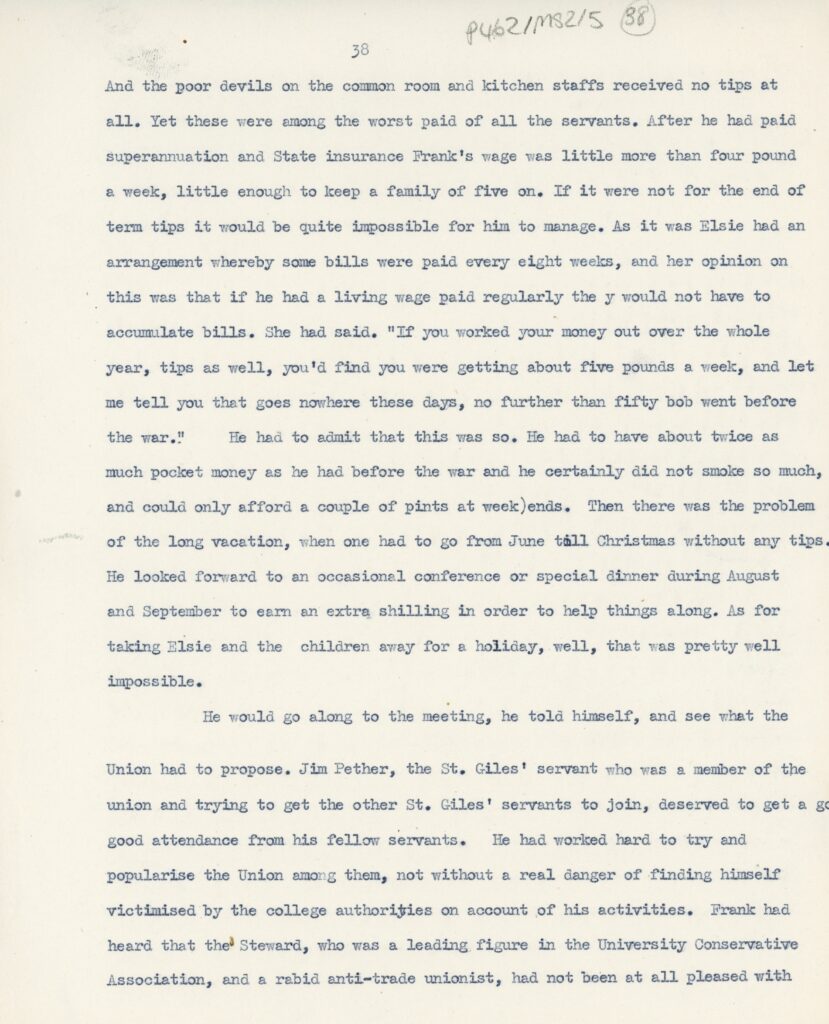
The main plot follows a college servant, Frank Harper, as he navigates an atmosphere of growing political unrest. Richardson also outlines the efforts of Jim Pether, Harper’s fellow servant, as he attempts to rally the staff at St Giles’ into unionising despite the ‘real danger of finding himself victimised by the college authorities on account of his activities’. The novel also contains a provocative subplot which details the blossoming romance between Jack Roberts, a communist undergraduate from Wales, and Daphne Gresham, the daughter of the college’s Principal.
In this extract, Frank Harper mulls over whether he should attend a meeting organised by Pether. The pros and cons Harper weighs, along with the working conditions he describes, almost certainly reflect the realities faced by servants like Horace Richardson. One assumes that the character of the college’s Steward – ‘a rabid anti-trade unionist’ – was inspired by someone Richardson knew at Magdalen.
MCA, P/462/MS2/5, pp. 37–38
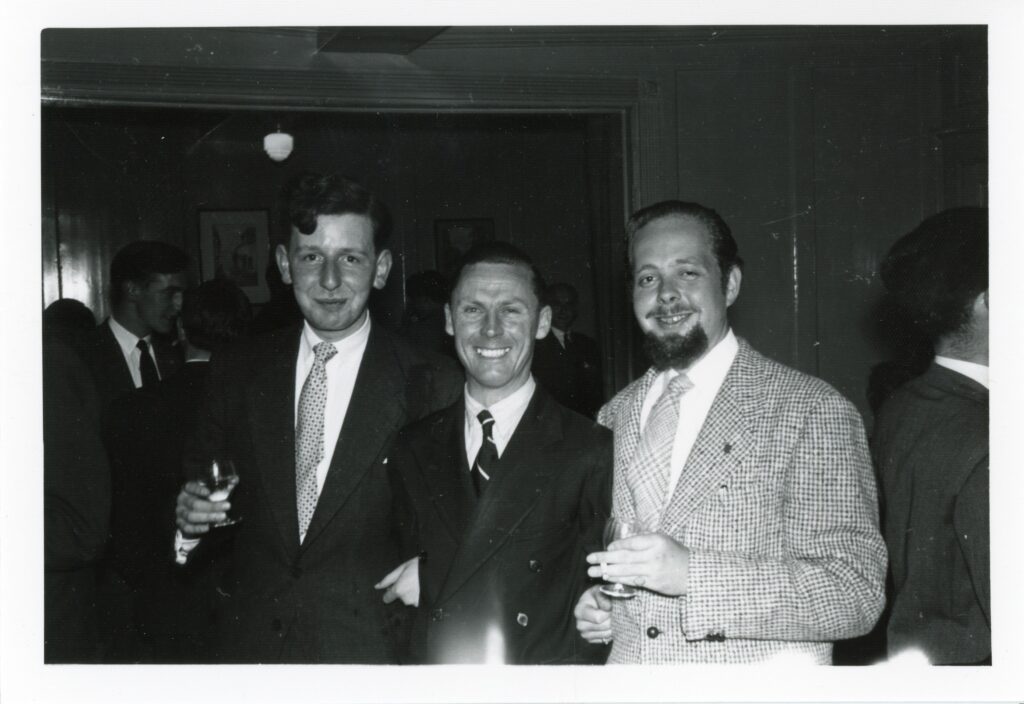
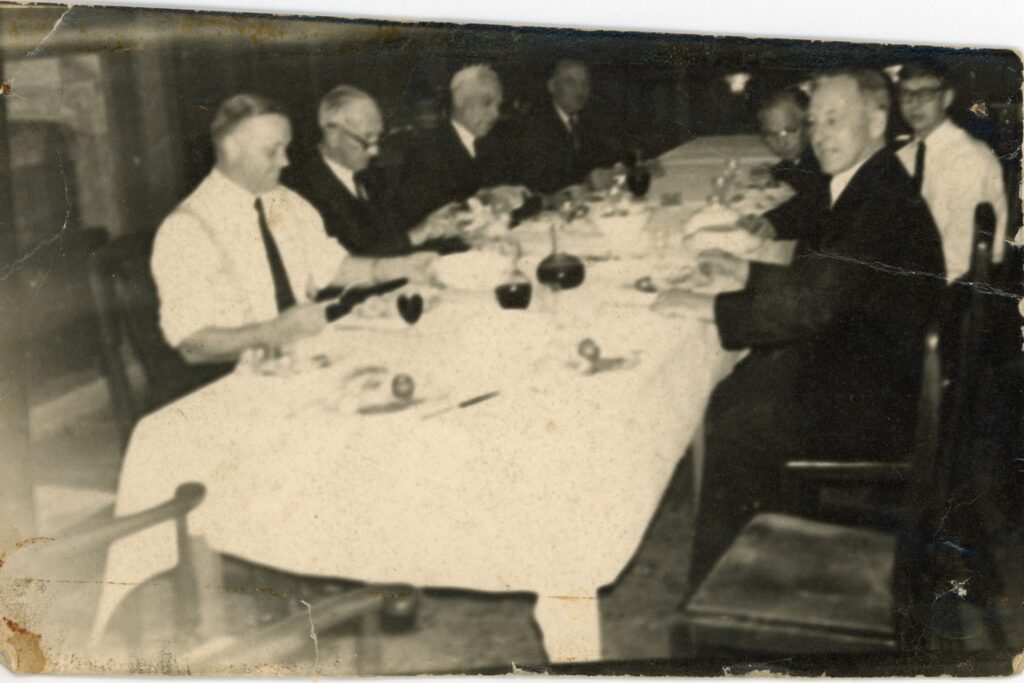
Socialising
On occasion, Magdalen staff might mingle with the students at social events. The first of these two photographs shows the college scout, Liddiard (centre), attending a student party in 1954; the second shows staff at a JCR wine outing.
MCA, B/3/20 & PH/P/503/5
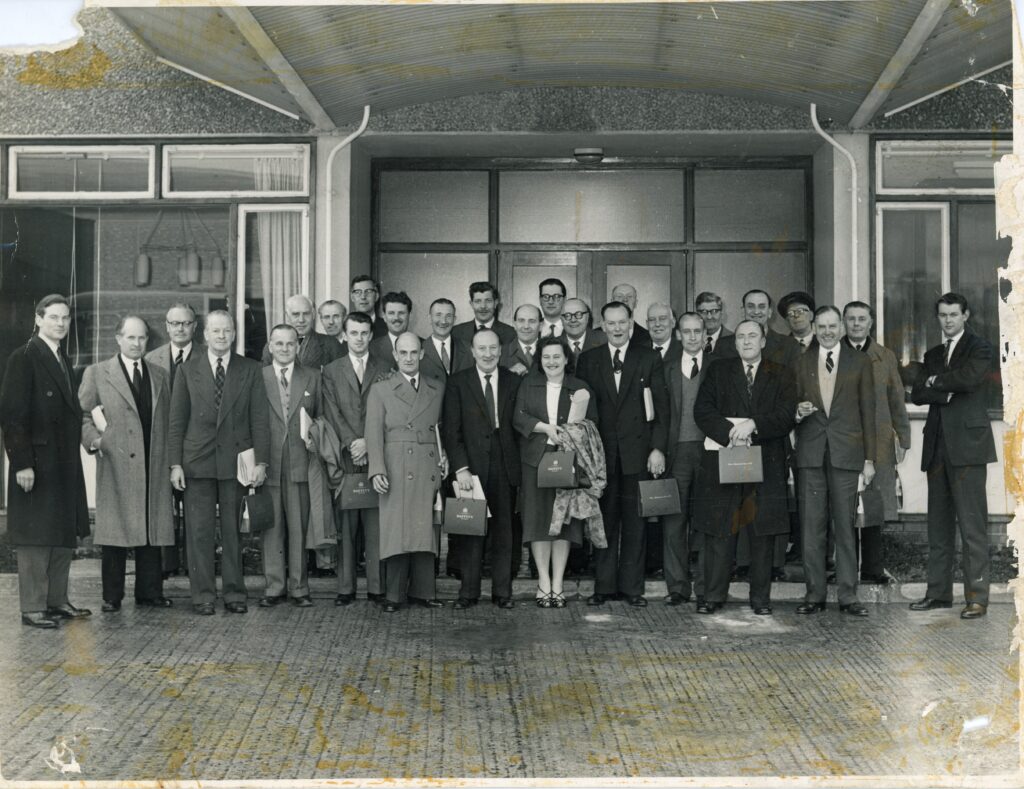
Staff outing
Staff outings were a fairly regular occurrence, although evidence relating to them is spartan. This image captures Magdalen staff as they pose for a group photograph after visiting Harveys of Bristol in the 1950s.
MCA, PH/P/503/2
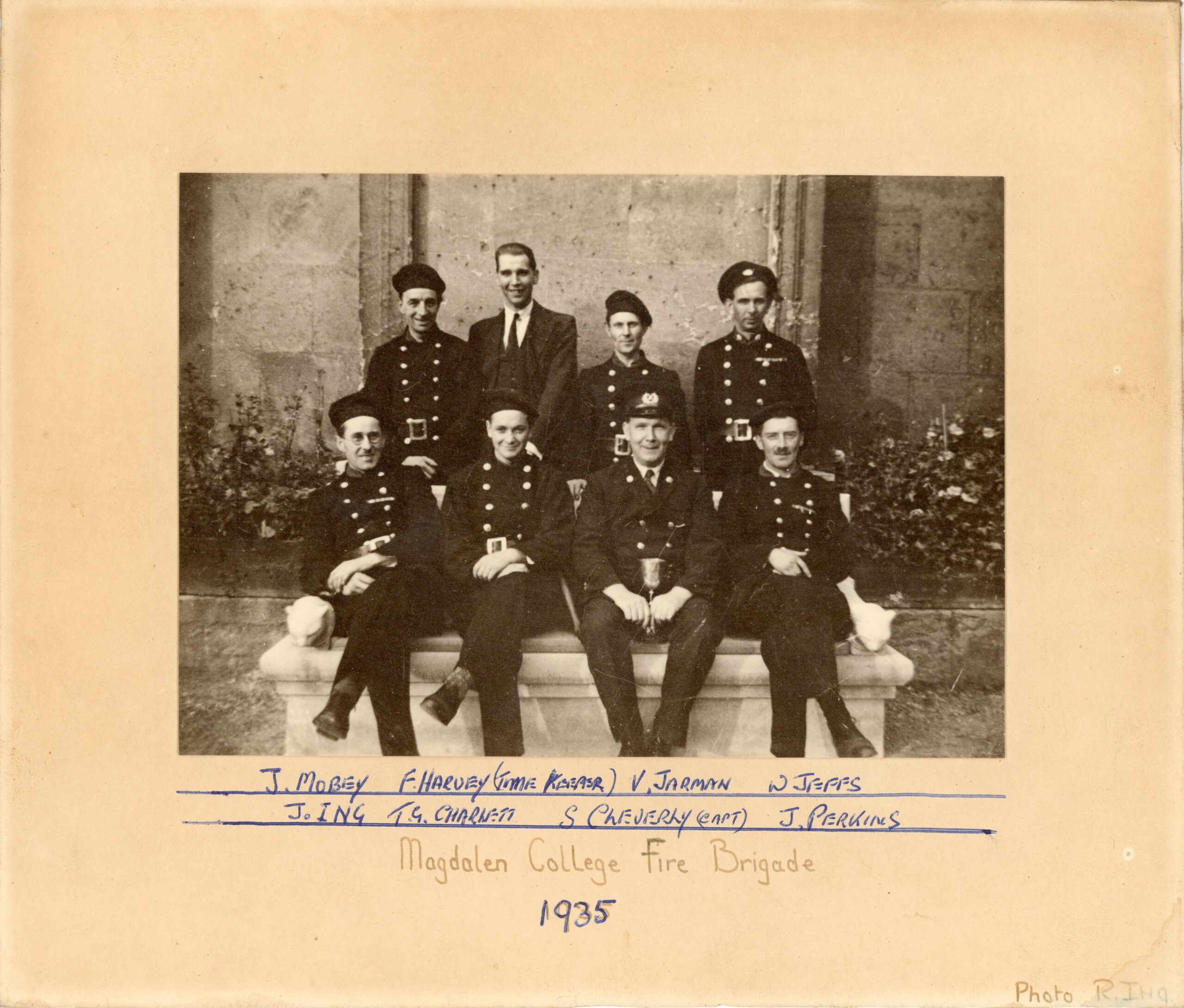
Firefighters
Besides engaging in various activities beyond Magdalen’s walls, college staff might also contribute to life within them outside their traditional roles.
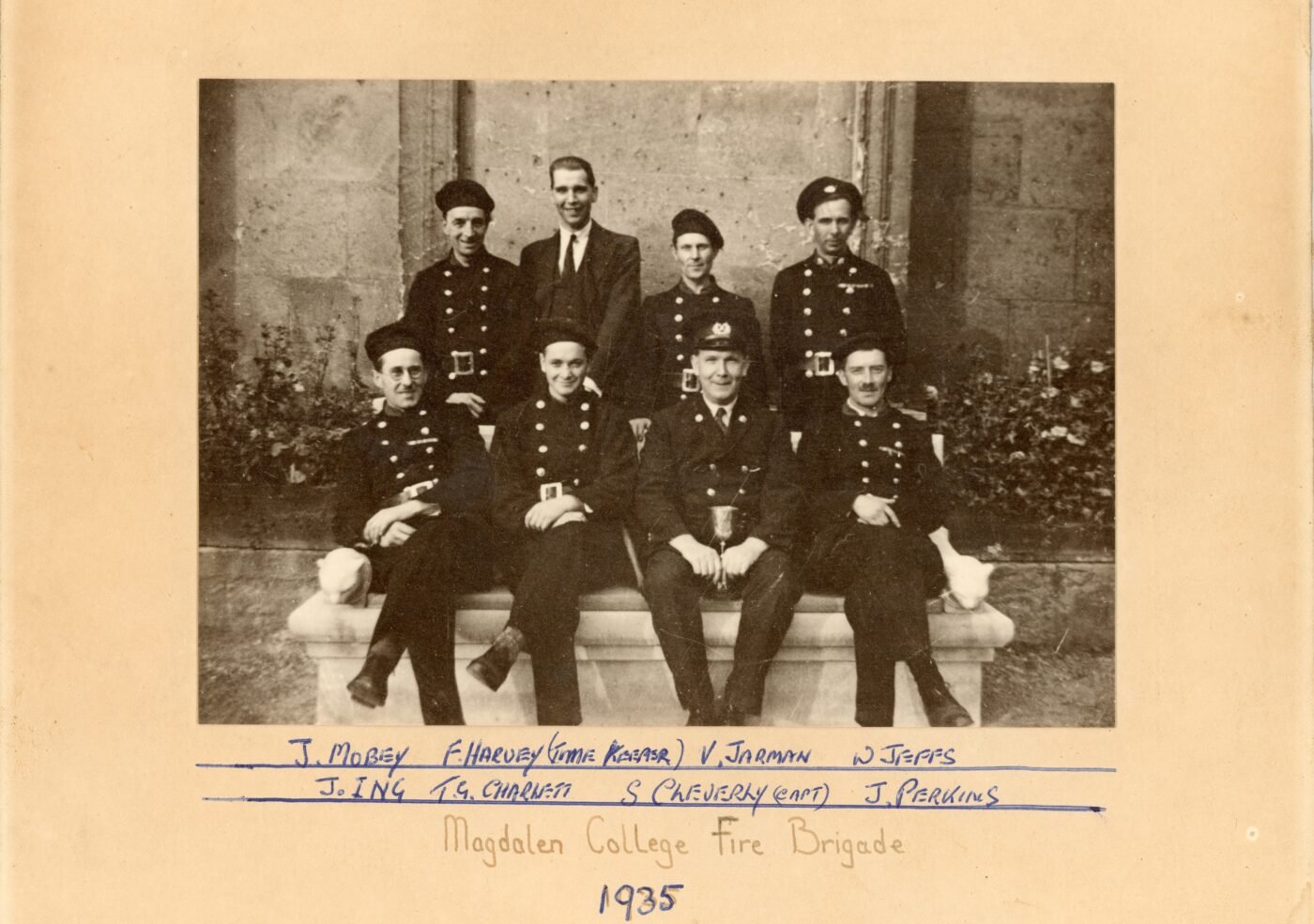
This photo shows members of the Magdalen College Fire Brigade. Founded at some point before 1925, it was formed exclusively of college staff. Among them is Tom Charlett, former Head Scout, and Frank Harvey, who later lost his life in service during World War II. College fire brigades would often compete with one another, including for a rowing ‘Challenge Cup’.
MCA, B/3/8
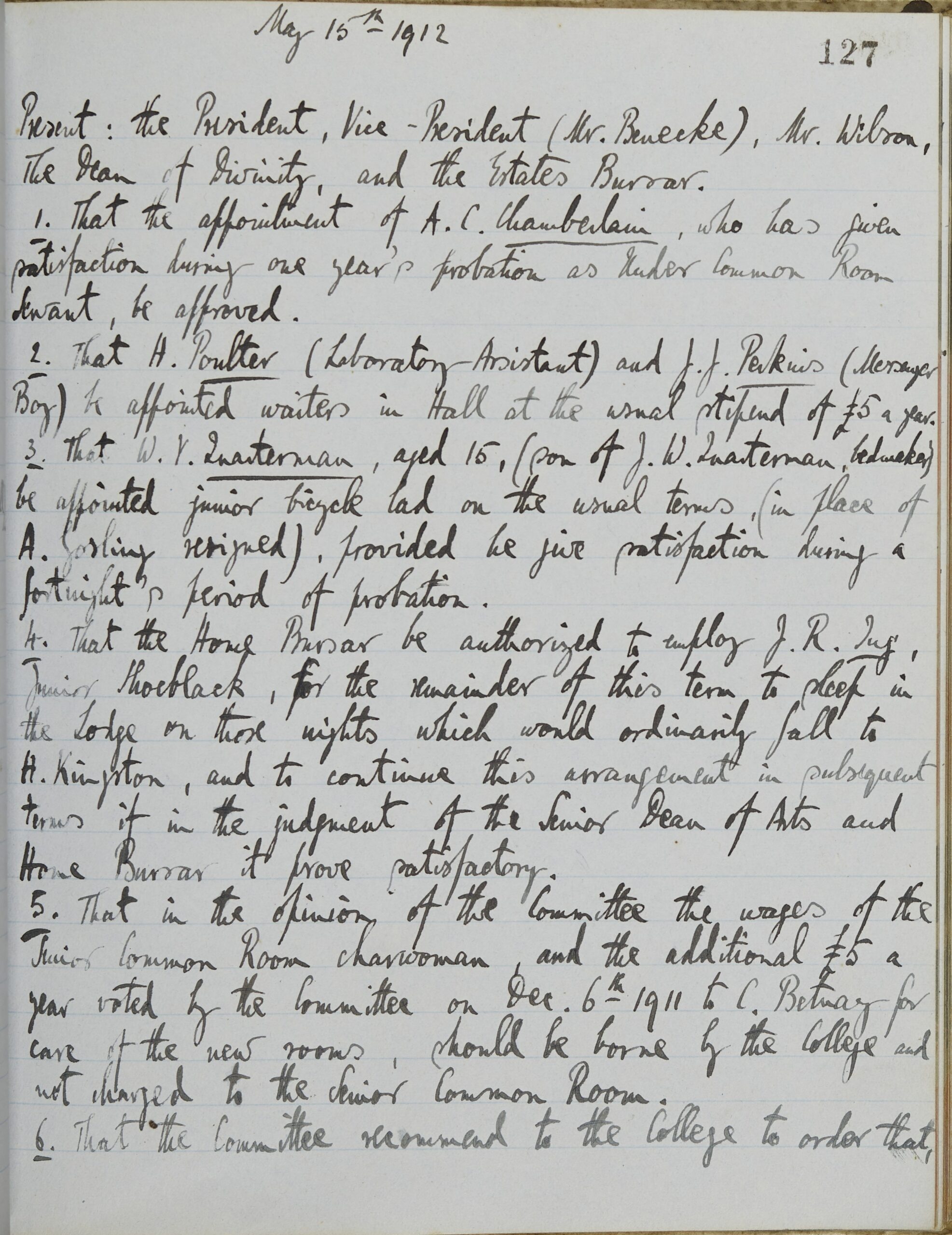
Magdalen College Servants Committee minute book
Entry concerning the appointment of William Quarterman as 'Junior Bicycle Lad'
William Quarterman
The page shown here is from one of two volumes containing minutes for the college’s Servants’ Committee. Established in November 1882, the committee was created to formalise deliberations and decisions made in relation to Magdalen’s staff, although they themselves had no representation on it.
Appointments were one of the committee’s main concerns. This page contains an entry regarding the employment in October 1911 of William Victor Quarterman, then just 14 years old, as a college Bicycle Assistant. Less than a decade later, Quarterman’s life would be cut tragically short in the closing months of the Great War (his entry in Magdalen’s war record is displayed below).
Born 8 February 1897 at 84 St Mary’s Road, Oxford, William Quarterman was the sixth of seven sons of Joseph William Quarterman (1859–1922) and Emma Christina Quarterman (née Acott) (c.1857–1921). Both Quarterman’s parents worked as scouts for Oxford colleges: his father for Keble and then for Magdalen, his mother for either Merton or Corpus Christi. In his role as Bicycle Assistant, William Quarterman would have reported to the Bicycle Man, helping him to repair bicycles belonging to the Fellows and students.
MCA, CP/9/24/2, p. 127
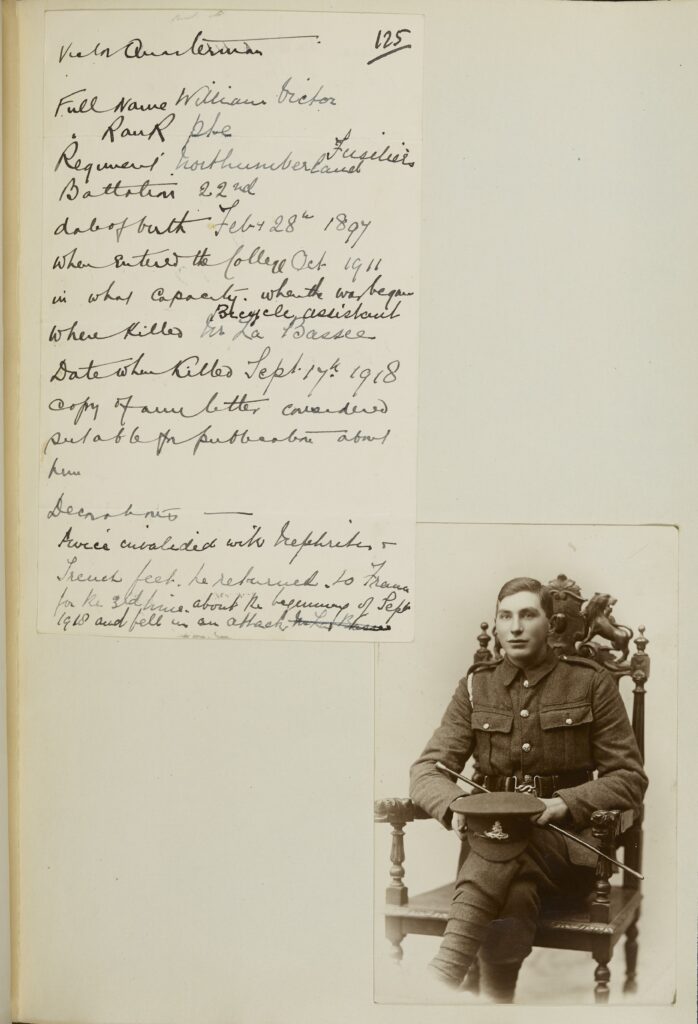
Roll of Honour
This page is reproduced from one of three volumes commemorating the Magdalen men who lost their lives during the First World War. Compiled as a counterpart to the stone war memorial erected in February 1921, the three-volume roll of honour contains photographs and short biographies of those who fell in action.
This entry relates to William Victor Quarterman, who joined Magdalen as a Bicycle Assistant in October 1911 at the age of 14. He continued in that job until, ‘being desirous of doing his duty and inspired by the earlier example of his four elder brothers’, he attested under the Derby Scheme in autumn 1915 and was called up on 1 August 1916. Quarterman is pictured to the right wearing the cap-badge and lanyard of a Gunner in the Royal Artillery, although he was later transferred to the Northumberland Fusiliers. He was killed in fighting on the southern side of the Canal d’Aire near Cuinchy, France, on 17 September 1918.
Writing after the war, Quarterman’s father spoke of the pride he felt in having his son’s name recorded on the Roll of Honour in college, ‘a place [William] really loved [and] where he did a little humble service’. Below are the names of all those Magdalen staff members known to have died in service during the two World Wars.
World War I (1914–18)
Levett, Cyril (Queen’s Own, Royal West Kent Regiment, 30 September 1916)
Palmer, Charles Thomas (Royal Army Medical Corps, 9 December 1916)
Quarterman, William Victor (Northumberland Fusiliers, 17 September 1918)
Roberts, Richard (Royal Garrison Artillery, 7 August 1916)
World War II (1939–45)
Bond, Reginald John (Royal Artillery, March 1943)
Harvey, Frank Edward (Royal Air Force Volunteer Reserve, 6 July 1945)
Lewis, Eric Gerald (Royal Fusiliers, City of London Regiment, 6 September 1944)
Payne, Reginald Cyril (149 Squadron, RAF Bomber Command, 16 April 1941)
MCA, MS/876 (iii)
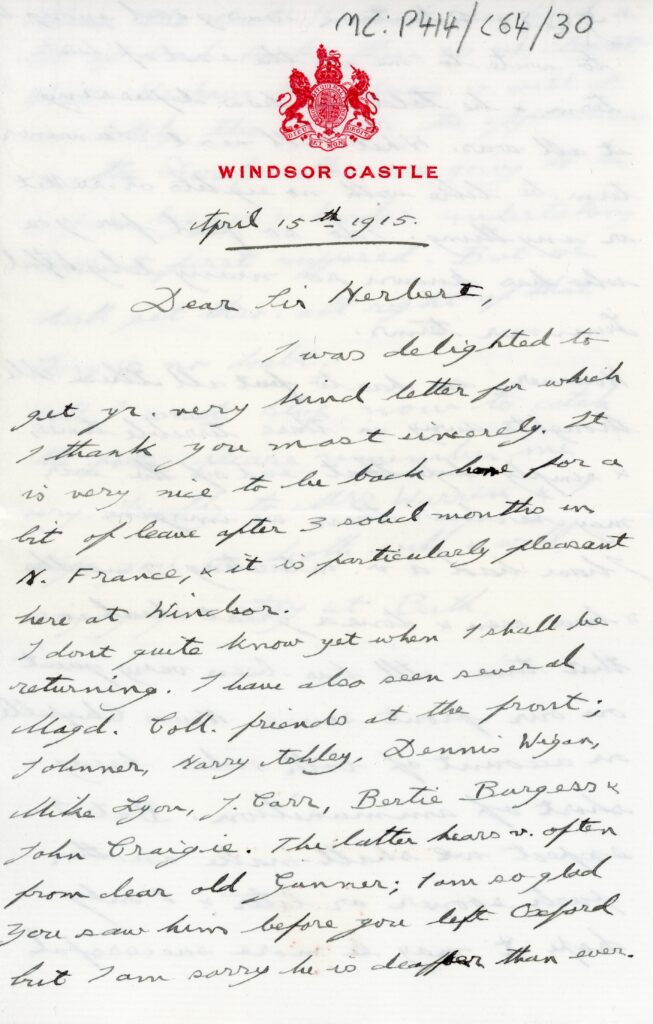
‘Old Gunner’
As the opening skirmishes of the Great War descended into prolonged and bloody trench warfare, correspondence flowed back and forth from Magdalen with updates concerning its members who were serving on the front line.
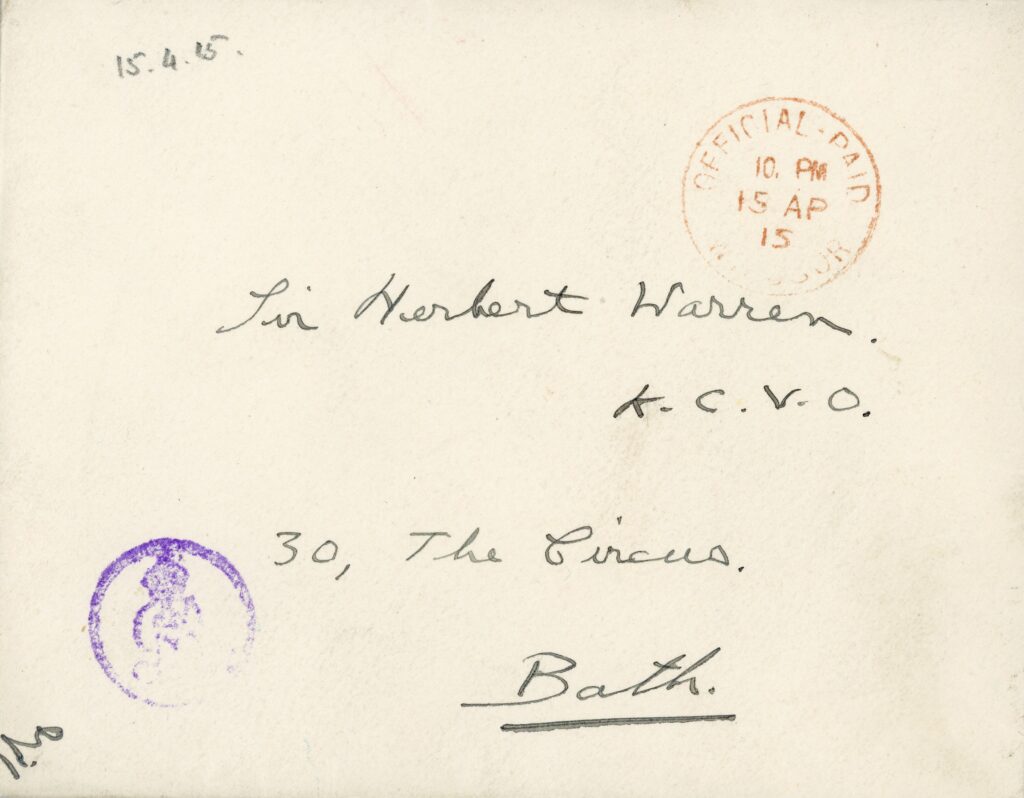
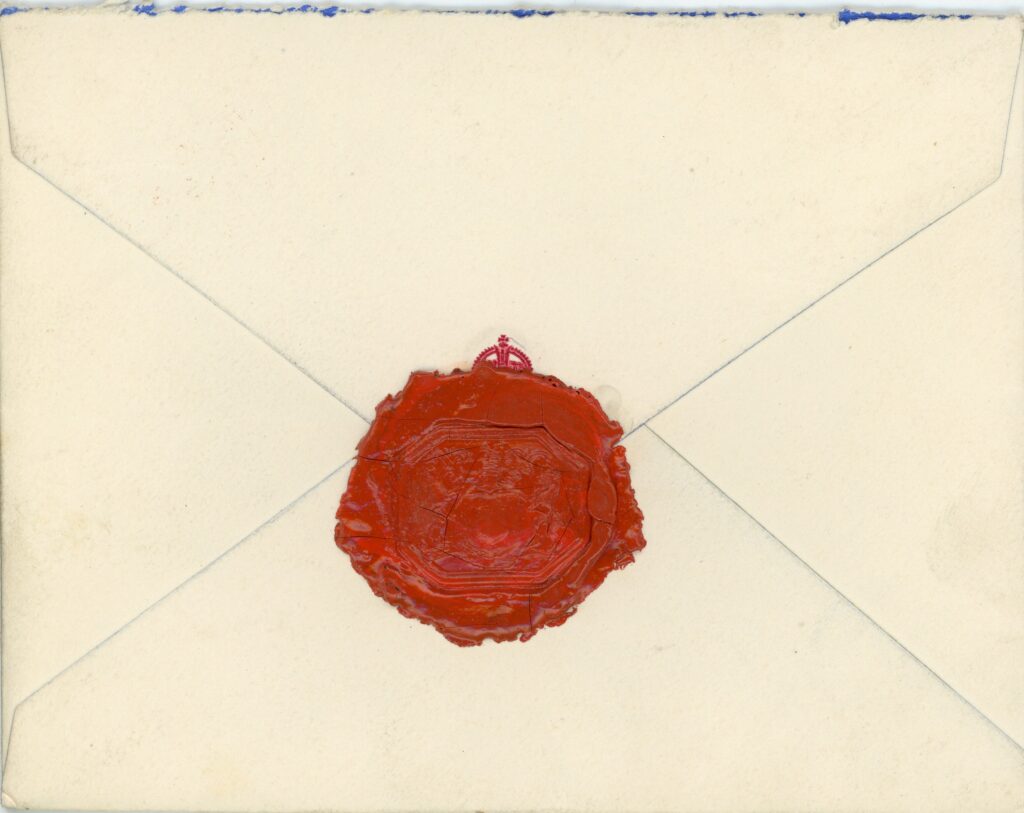
In this letter, dated 15 April 1915, the future Edward VIII, himself a former Magdalen student, writes to President Herbert Warren. He recounts his own recent visit to the front, during which he saw many Magdalen men. These included John Craigie (1910), whom the prince reports was hearing regularly from ‘old Gunner’, namely Richard Gunstone, the former JCR Steward.
MCA, P/414/C64/30